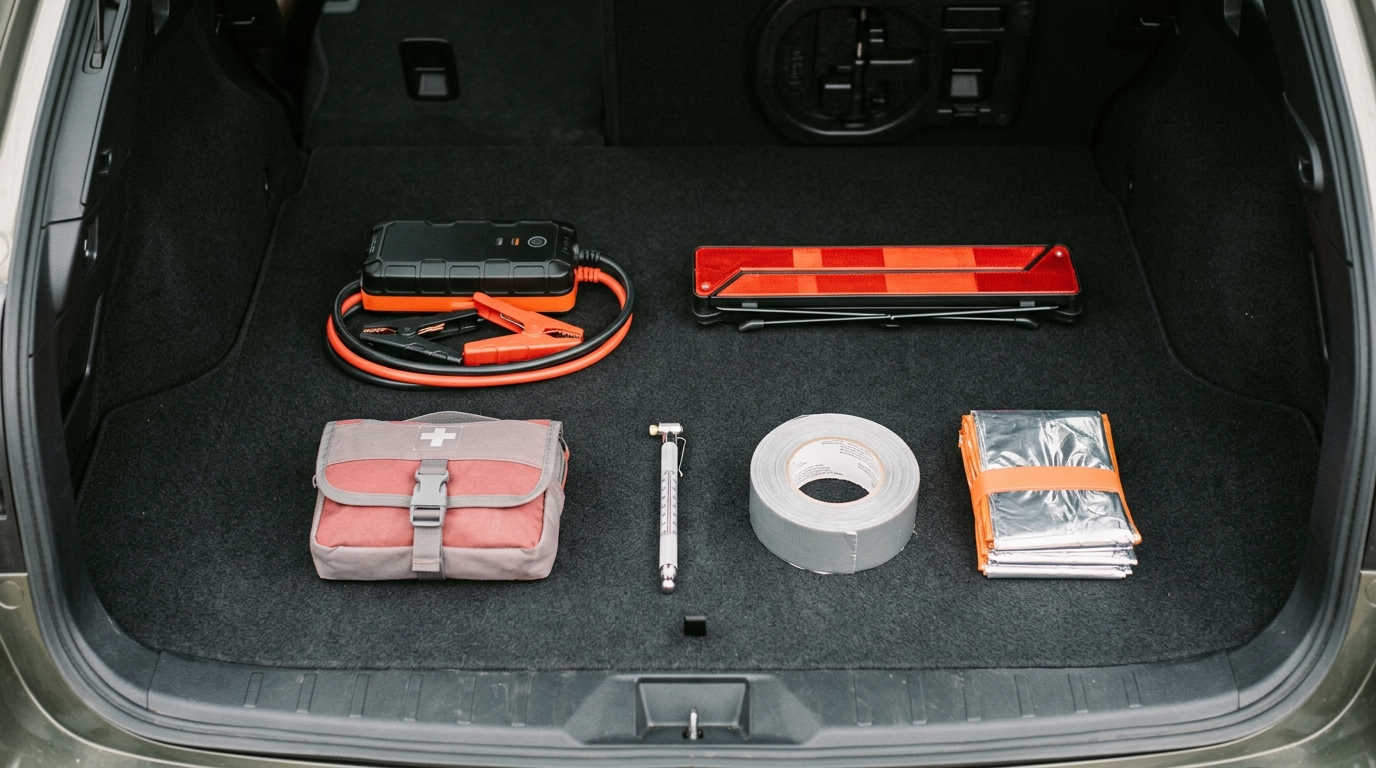
Nobody plans for a flat tire on a dark stretch of highway or a dead battery in an empty parking lot at 11 p.m. But if you drive regularly, one of those moments is probably waiting for you somewhere down the road. What separates a stressful five-minute delay from a genuinely dangerous night usually isn’t luck — it’s whether you packed the right emergency car accessories before you needed them.
A good car emergency kit doesn’t have to be bulky, expensive, or complicated to put together. It just has to cover the handful of situations that trip drivers up most often: a battery that won’t start, a tire that won’t hold air, an injury that needs quick attention, or a stretch of road where nobody can see you. Below is a practical, no-fluff breakdown of what belongs in every car, along with a few extras worth adding depending on your climate and how you drive.
Portable Jump Starter
A dead battery is one of the most common reasons drivers end up stranded, and it rarely gives much warning. A portable lithium jump starter has mostly replaced traditional jumper cables because it doesn’t require flagging down a stranger or finding a second vehicle. These units have shrunk down to the size of a paperback book, and many double as a phone charger or built-in flashlight for added convenience.
When shopping for one, match the amp rating to your engine size — a compact sedan and a full-size truck don’t need the same jump starter. It’s also worth charging the unit every couple of months, since lithium batteries slowly lose charge sitting unused in a trunk.
Digital Tire Pressure Gauge and Portable Inflator
A tire pressure warning light tells you something’s wrong, but not why or how badly. Keeping a digital tire pressure gauge in the glovebox lets you check things yourself instead of guessing, and a compact 12-volt inflator can top off a slow leak enough to get you safely to a repair shop. Together, these two tools are inexpensive, barely take up any space, and prevent a large share of avoidable roadside calls every year.
Well-Stocked First Aid Kit
Not every car emergency involves the vehicle at all. Minor cuts, headaches, allergic reactions, or carsickness happen often enough that a basic first aid kit deserves a permanent spot in the trunk. Beyond the standard adhesive bandages, gauze, and antiseptic wipes, consider adding any over-the-counter medication your family regularly relies on — emergencies have an inconvenient habit of happening far from the nearest pharmacy.
Reflective Warning Triangles
If your car breaks down on a shoulder or in low light, the real danger often isn’t the breakdown itself — it’s other drivers not noticing you in time. Reflective warning triangles are reusable, never expire, and are considerably safer to set up than old-style road flares. Place them well behind your vehicle so oncoming traffic has enough distance to react and slow down safely.
Multi-Tool with Seatbelt Cutter and Window Breaker
This is the one item most drivers hope they’ll never touch, which is exactly why it belongs in the door pocket or center console rather than buried under luggage in the trunk. A combination seatbelt cutter and spring-loaded window breaker can make all the difference in a submerged vehicle or post-collision fire, when a jammed buckle or a stuck door becomes a matter of seconds, not minutes.
Weatherproof Emergency Blanket and Extra Layers
Getting stranded in cold weather is more dangerous than most drivers assume, even for a short wait. A compact thermal emergency blanket folds down small but holds body heat surprisingly well. Drivers in colder regions should also pack gloves, a warm hat, and an extra layer, since a car’s heater is no help once the engine is off.
Bottled Water and Shelf-Stable Snacks
Waiting for roadside assistance can take an hour or more, especially in rural areas or during severe weather. A few bottles of water and some non-perishable snacks aren’t glamorous additions to a kit, but they make a long wait far more manageable — particularly with kids or pets along for the ride.
Portable Phone Charger and a Paper Map
Cell coverage isn’t guaranteed everywhere, and a dead phone during an emergency creates a problem of its own. A fully charged portable battery pack solves one half of that equation. A simple paper map or a set of printed directions solves the other, covering the rare but very real scenario where GPS and cell signal both disappear at the same time.
Duct Tape and Zip Ties
These two low-cost items solve a surprising number of small but disruptive problems: a loose bumper panel, a flapping side mirror, a cracked hose clamp, or a quick fix that gets you to a mechanic instead of stranding you on the roadside. Neither takes up meaningful space in a kit, and both tend to prove useful in situations you’d never think to plan for.
Building a Kit That Actually Gets Used
Most of these items fit into a single soft-sided organizer that tucks under the trunk floor or behind a back seat without getting in the way of everyday driving. The real value of an emergency car kit comes from consistency, not completeness: check first aid supplies for expired items, recharge the jump starter a few times a year, and swap out water bottles seasonally so nothing goes stale or freezes.
An emergency car kit is one of those things most drivers never think about until the moment they genuinely need it. Putting one together now means that moment turns into a minor delay instead of a real crisis.
Frequently Asked Questions
What are the most important emergency car accessories to have? A portable jump starter, a tire pressure gauge with an inflator, a first aid kit, and reflective warning triangles cover the most common roadside emergencies: dead batteries, low tires, minor injuries, and low-visibility breakdowns.
How often should I check or replace items in my car emergency kit? Check your kit at least twice a year, ideally at the start of summer and winter. Recharge jump starters and power banks, replace expired first aid supplies, and swap out water bottles so they don’t freeze or degrade in heat.
Do I need different emergency accessories for winter driving? Yes. In addition to the year-round essentials, winter driving calls for an emergency blanket, gloves, a warm hat, a small snow shovel, and sand or cat litter for traction if you get stuck in snow or ice.
Where should I store my emergency car kit? Keep bulkier items like blankets, water, and tools in the trunk. Store anything you might need quickly in an emergency, such as a seatbelt cutter or window breaker, within arm’s reach in the door pocket or center console instead.
Are jump starters better than traditional jumper cables? For most drivers, yes. A portable jump starter lets you start your own car without needing a second vehicle nearby, and many models also charge phones or work as a flashlight, making them more versatile than cables alone.
Discover more from Auto Volt Tech
Subscribe to get the latest posts sent to your email.
 Auto Volt Tech