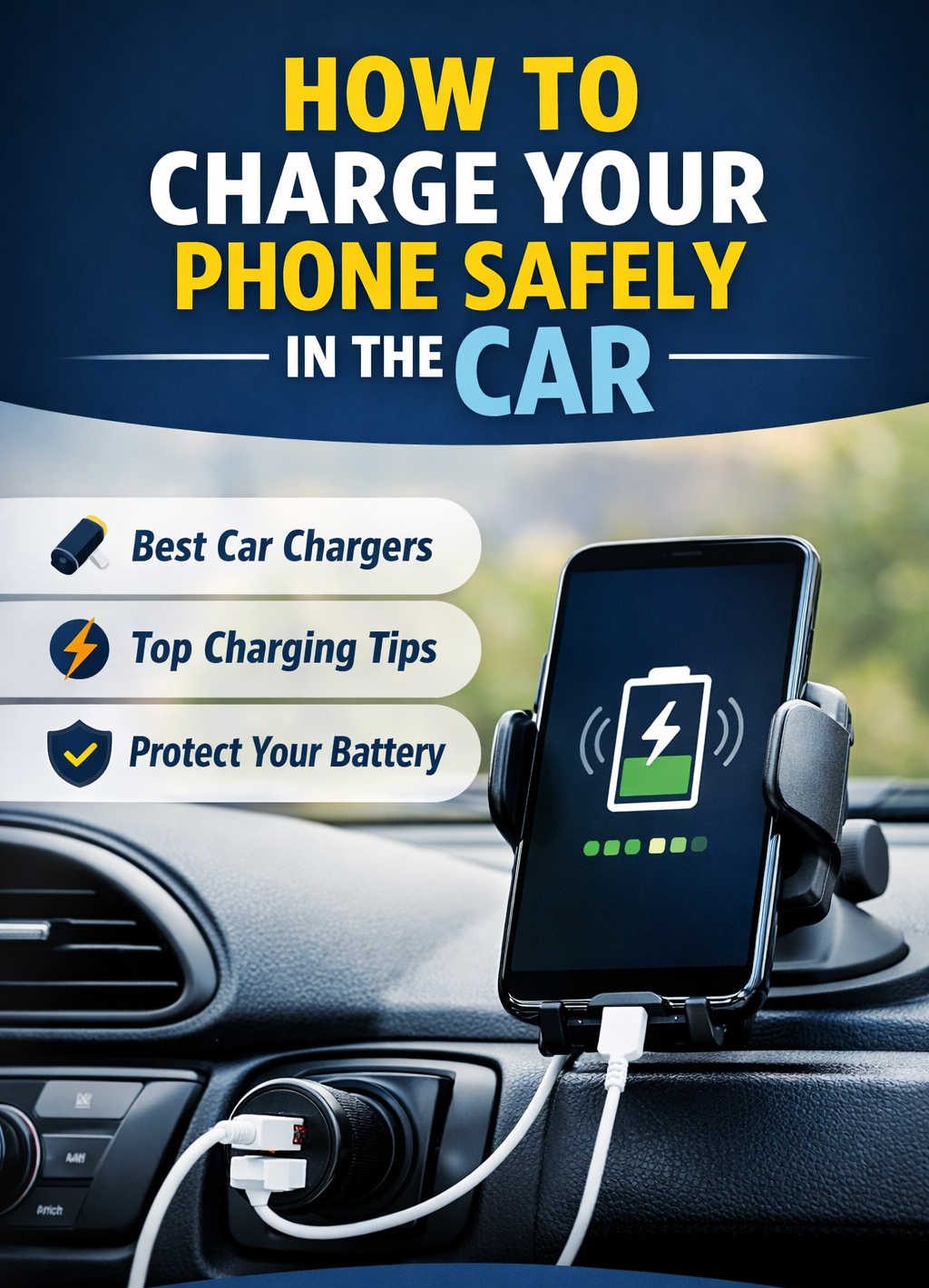
Charging your phone in the car has become second nature. Whether you are commuting to work, navigating an unfamiliar city, or heading out on a long road trip, your phone plays a critical role. It handles navigation, communication, entertainment, and even emergency support. When the battery runs low, plugging it into the car feels like the obvious solution.
However, charging a phone in a vehicle is not as simple or harmless as many people assume. Poor-quality chargers, incorrect cables, extreme temperatures, and bad charging habits can slowly damage your phone’s battery, reduce its lifespan, or even create safety risks. In some cases, improper charging can also strain your car’s electrical system.
This guide explains how to charge your phone safely in the car, step by step, while protecting both your device and your vehicle. You will learn how car charging works, which accessories matter most, common mistakes to avoid, and how to maximize battery health over time.
Why Safe Phone Charging in the Car Matters
Modern smartphones use lithium-ion or lithium-polymer batteries. These batteries are efficient and powerful, but they are also sensitive to heat, voltage fluctuations, and poor-quality power sources.
When charging in a car, your phone depends on the vehicle’s electrical system, which is far less stable than a household wall outlet. Engine start-ups, sudden acceleration, and older wiring can all cause voltage changes. A high-quality charger manages these fluctuations safely. A cheap or faulty one may not.
Unsafe or improper charging can lead to:
- Faster battery degradation
- Overheating and performance throttling
- Slow or inconsistent charging
- Damage to the charging port or cable
- In extreme cases, battery swelling or electrical failure
Charging safely is not just about speed or convenience. It is about protecting a device you rely on every day.
Understanding How Phone Charging Works in a Car
Before choosing the right charger, it helps to understand what actually happens when you plug your phone into a car.
Most vehicles use a 12-volt DC electrical system. Smartphones, on the other hand, require much lower voltage, usually around 5 volts, with higher levels used temporarily for fast charging protocols.
A car charger adapter performs several important tasks:
- Converts 12 volts into safe charging voltage
- Regulates current flow to prevent overload
- Communicates with the phone to determine charging speed
- Protects against short circuits and overheating
Without a proper adapter, connecting a phone directly to a car power source would damage it almost instantly. This is why charger quality matters far more in cars than many people realize.
Choosing the Right Car Charger for Safe Charging
Not all car chargers are created equal. The right choice depends on your phone, usage habits, and how many devices you charge at once.
Standard USB-A Car Chargers
These chargers are common and affordable. They usually provide basic charging at lower speeds.
They are suitable if:
- You use an older phone
- Fast charging is not important to you
- You only need occasional charging
However, many low-cost models lack proper safety features, so brand reputation is important.
USB-C Car Chargers with Power Delivery
USB-C chargers with Power Delivery (PD) support modern fast charging standards. They adjust voltage dynamically, which allows faster charging without overheating.
These chargers are ideal for:
- Newer Android phones
- Newer iPhones with USB-C or USB-C to Lightning cables
- Users who rely on navigation and heavy phone usage
They are generally safer and more efficient when paired with quality cables.
Multi-Port Car Chargers
If you travel with passengers or charge multiple devices, a multi-port charger can be useful.
Look for:
- Intelligent power distribution
- Sufficient total wattage for all devices
- Independent port protection
Cheap multi-port chargers often divide power poorly, resulting in slow or unstable charging.
Wireless Car Chargers
Wireless chargers eliminate cables and reduce wear on charging ports. Many also double as phone mounts.
Advantages:
- Convenience
- Cleaner setup
- Less plugging and unplugging
Disadvantages:
- Slower charging
- Increased heat generation
- Requires precise phone alignment
Wireless charging is safe when done with high-quality equipment, but heat management is critical.
The Importance of Using High-Quality Charging Cables
Cables are often overlooked, yet they are one of the most common causes of charging problems.
A poor-quality cable can:
- Reduce charging speed
- Cause voltage drops
- Generate excess heat
- Damage your phone’s charging port
When choosing a cable:
- Match it exactly to your phone’s port type
- Ensure it supports fast charging if needed
- Look for reinforced connectors
- Avoid extremely thin or stiff cables
Certified cables may cost more, but they significantly reduce long-term risk.
Step-by-Step Guide to Charging Your Phone Safely in the Car
Prepare Your Phone Before Charging
Before plugging in:
- Close unused apps
- Lower screen brightness
- Turn off unnecessary wireless features
This reduces power draw and heat buildup.
Plug in the Charger Before Starting the Engine
Whenever possible, insert the charger into the car’s power outlet before starting the engine. This helps protect your phone from voltage spikes that can occur during ignition.
Use the Correct Cable and Port
Make sure the cable fits snugly and is not loose. Avoid forcing connectors, as this damages both the cable and the phone’s port.
If your charger has multiple ports, use the one designed for fast charging when needed.
Secure the Phone Properly
Use a stable phone mount to:
- Keep your hands free
- Prevent the phone from falling
- Reduce strain on the charging cable
Avoid letting the phone dangle by the cable, as this weakens internal connectors over time.
Monitor Heat While Charging
A warm phone is normal. A hot phone is not.
If your phone becomes uncomfortably hot:
- Unplug it immediately
- Remove it from direct sunlight
- Allow it to cool before charging again
Heat is the single biggest enemy of battery health.
How to Charge Faster Without Damaging Your Phone
Fast charging is safe when done correctly, but it must be managed wisely in a car environment.
To charge faster safely:
- Use a fast-charging compatible car adapter
- Use a certified fast-charging cable
- Avoid using heavy apps while charging
- Keep the phone ventilated and out of sunlight
If you only need a quick top-up, charging for 10–15 minutes can restore enough battery without stressing the phone.
Common Mistakes That Damage Phones During Car Charging
Using Extremely Cheap Chargers
Low-cost chargers often skip critical safety components. They may deliver unstable voltage or fail under heat.
Saving a few dollars upfront can cost you a battery replacement later.
Charging With the Engine Off for Long Periods
Charging while the engine is off can drain the car battery, especially in older vehicles. This can lead to:
- Difficulty starting the car
- Inconsistent charging
- Voltage drops
If you need to charge while parked, limit the time or use a power bank.
Leaving the Phone in a Hot Car
Cars heat up quickly in sunlight. Charging in these conditions accelerates battery degradation and may trigger safety shutdowns.
Always cool the car interior before charging.
Using the Phone Heavily While Charging
Running navigation, streaming music, and answering calls simultaneously increases heat and slows charging.
Whenever possible, let the phone charge without heavy use.
Does Charging in the Car Damage Your Battery?
Charging in the car does not inherently damage your battery. Damage occurs due to:
- Excessive heat
- Poor voltage regulation
- Low-quality accessories
- Frequent charging from very low battery levels
With proper equipment and habits, car charging is just as safe as home charging.
How Car Charging Affects Long-Term Battery Health
Lithium batteries degrade gradually over time. You can slow this process by:
- Avoiding extreme temperatures
- Not charging to 100% constantly
- Keeping the battery between 20% and 80% when possible
- Using stable power sources
Occasional full charges are fine, but daily overcharging under heat accelerates wear.
Charging Multiple Devices Safely in One Car
If you charge several devices at once:
- Use a high-wattage charger
- Avoid daisy-chaining adapters
- Monitor total power output
Overloading a charger leads to overheating and voltage instability.
Older Cars vs Newer Cars: Charging Differences
Older cars often have:
- Weaker alternators
- Less stable voltage
- Lower-powered USB ports
Newer vehicles may include:
- Built-in fast USB ports
- Wireless charging pads
- Smarter power management
In older cars, a high-quality adapter is especially important.
Emergency Charging Tips While Driving
When battery life is critical:
- Enable airplane mode
- Turn off background apps
- Charge for short bursts
- Reduce screen usage
These steps maximize charging efficiency during short drives.
Wireless Charging in Cars: Is It Worth It?
Wireless charging is convenient and reduces wear on ports, but it produces more heat and charges more slowly.
It works best when:
- Used with navigation mounts
- Paired with high-quality pads
- Used in moderate temperatures
For long drives, wired fast charging is still more efficient.
The Future of In-Car Phone Charging
Automotive technology continues to improve:
- Built-in wireless charging pads
- Higher-powered USB-C ports
- Smarter energy management
- Integrated phone cooling systems
As cars evolve, safe charging will become more seamless, but good habits will always matter.
Key Takeaways for Safe Car Phone Charging
- Use reputable car chargers and certified cables
- Avoid extreme heat while charging
- Do not rely on charging with the engine off
- Secure your phone properly
- Monitor temperature regularly
- Avoid cheap accessories
Final Thoughts
Charging your phone in the car is no longer optional for most drivers. It is an everyday necessity. While it may seem simple, doing it incorrectly can slowly harm your phone and compromise safety.
By choosing quality accessories, understanding how car charging works, and following smart charging habits, you can keep your phone powered, protected, and reliable wherever the road takes you.
Safe charging is not about being overly cautious. It is about being informed. When you treat your phone and your car’s electrical system with care, both will serve you better for years to come.
Discover more from Auto Volt Tech
Subscribe to get the latest posts sent to your email.
 Auto Volt Tech