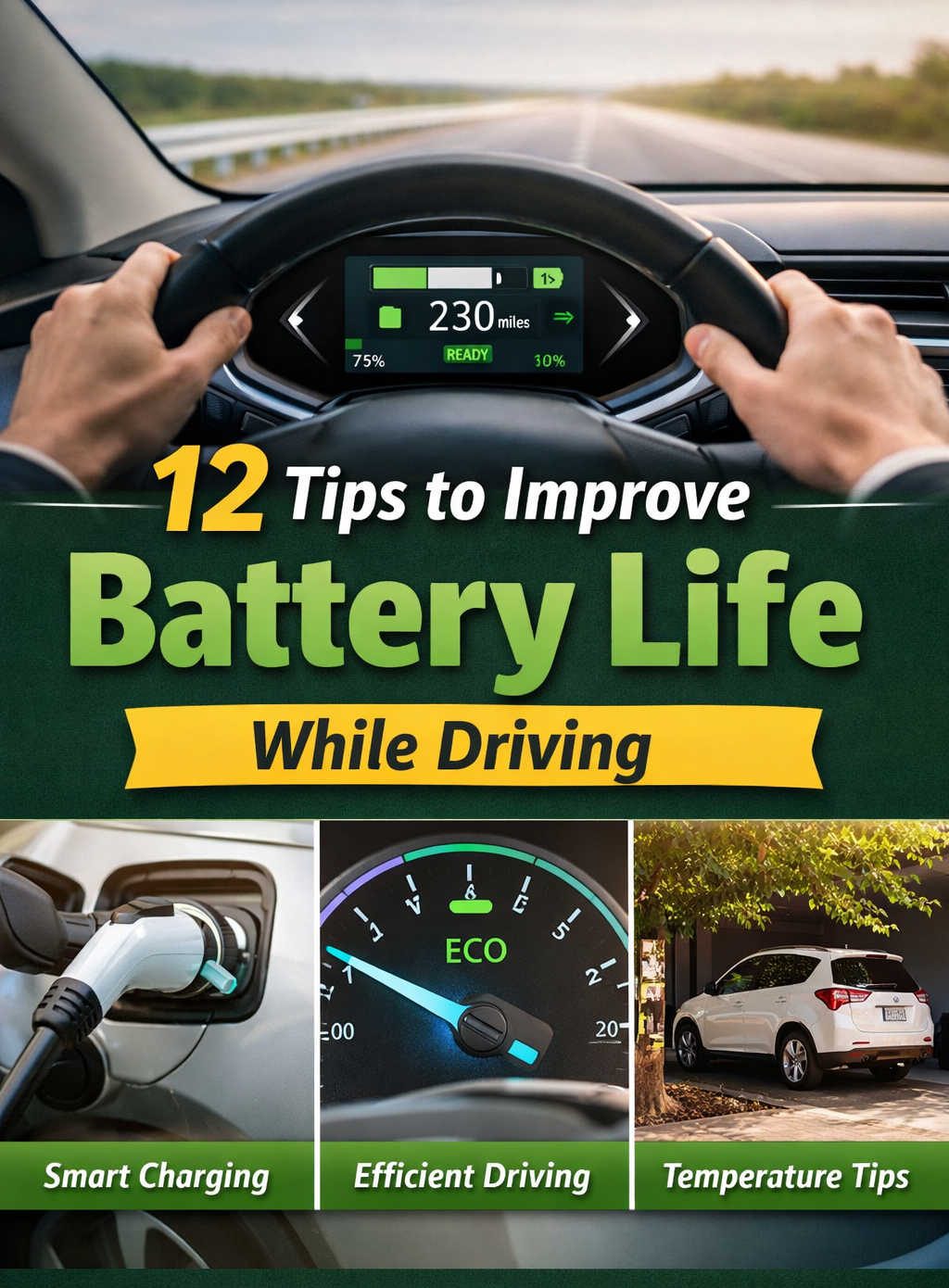
Electric vehicles are no longer futuristic novelties — they’re a growing part of daily transportation. Whether you drive a fully electric car, plug-in hybrid, electric scooter, or another battery-powered vehicle, one factor influences your experience more than anything else: battery performance. Drivers care about how far they can travel on a charge, how quickly that charge drains, and how long the battery lasts over years of use.
Many people assume battery life depends mostly on technology or manufacturer design. While engineering plays a huge role, real-world driving behavior and everyday habits are equally important. The way you accelerate, brake, plan routes, handle charging, or manage temperature exposure directly impacts energy efficiency and long-term battery health.
This comprehensive guide explores practical, actionable strategies for improving battery life while driving. It combines technical insight with realistic everyday advice, helping drivers maximize range, reduce costs, and extend the useful lifespan of their vehicle’s battery system. Whether you’re new to electric mobility or already experienced, these tips will help you drive smarter and more efficiently.
Understanding What “Battery Life” Really Means
Before discussing strategies, it’s important to clarify terminology. Drivers often use “battery life” to describe two related but distinct concepts:
- Range efficiency — how long the battery lasts during a single drive or charge cycle
- Battery longevity — how many years the battery retains usable capacity before degradation becomes noticeable
Improving efficiency helps you travel farther on each charge. Improving longevity helps preserve overall capacity over time. These goals overlap because efficient driving reduces strain on battery components, but they aren’t identical.
Lithium-ion batteries — the most common type in modern vehicles — degrade gradually through charge cycles, heat exposure, and electrical stress. You cannot stop degradation completely, but smart habits significantly slow the process. Understanding this relationship helps you focus on behaviors that benefit both short-term performance and long-term reliability.
Drive Smoothly and Predictably
Driving style is the single most influential factor affecting battery consumption during everyday use. Rapid acceleration demands high current draw from the battery, which drains energy quickly and generates heat. Abrupt braking wastes kinetic energy unless captured through regenerative systems.
Adopting a smoother approach to driving dramatically improves efficiency.
Gradual acceleration allows the motor to increase speed without large power spikes. Maintaining steady velocity instead of constantly changing speeds reduces energy fluctuations. Anticipating traffic flow helps avoid unnecessary stops or harsh braking events.
This approach not only conserves energy but also reduces mechanical wear on drivetrain components. It creates a calmer driving experience and typically results in measurable range improvement over time.
Simple habits include:
- Pressing the accelerator gently rather than aggressively
- Watching traffic ahead to anticipate slowdowns
- Allowing momentum to carry the vehicle when safe
- Keeping speed consistent on open roads
Efficiency improvements from smooth driving can be surprisingly substantial, especially in urban environments where stop-and-go patterns dominate.
Maintain Reasonable Speed Levels
Speed influences battery usage more than many drivers realize. As velocity increases, aerodynamic drag rises exponentially. This means energy consumption climbs dramatically at higher speeds even if the difference seems small from the driver’s perspective.
Driving moderately instead of pushing maximum speed preserves range and reduces stress on electrical systems. While highway driving is generally efficient compared to congested city conditions, excessively high speeds can offset those benefits.
To optimize efficiency:
- Stay near recommended speed ranges
- Avoid unnecessary high-speed bursts
- Use cruise control when appropriate
- Monitor energy consumption indicators on your dashboard
Balancing travel time and energy use becomes easier with experience. You’ll learn which speeds provide the best compromise between efficiency and practicality.
Make Smart Use of Regenerative Braking
Regenerative braking converts motion into stored energy by allowing the electric motor to function as a generator during deceleration. This recovered energy returns to the battery instead of being lost as heat through friction brakes.
Understanding how to leverage this system can extend driving range significantly.
Rather than braking suddenly, gradually reduce accelerator pressure to activate regeneration. Many vehicles allow drivers to adjust regeneration strength — experimenting with settings helps identify the most comfortable and efficient configuration.
However, balance matters. Extremely aggressive regeneration in certain conditions may increase heat generation. Combining regenerative and conventional braking provides optimal results in most scenarios.
Effective use involves:
- Anticipating stops early
- Releasing the accelerator sooner
- Using regeneration settings strategically
- Practicing controlled deceleration
Mastering regenerative driving turns everyday slowing and stopping into opportunities for energy recovery.
Plan Routes Strategically
Route selection influences battery consumption more than many drivers expect. Congested roads, frequent stops, steep inclines, and inefficient detours all increase energy use.
Using navigation tools designed for electric mobility helps identify efficient routes, estimate energy requirements, and locate charging infrastructure when necessary.
Route optimization involves:
- Avoiding heavy congestion when possible
- Choosing steady-flow roads over stop-and-go corridors
- Considering elevation changes
- Planning charging stops ahead of longer trips
Even minor route adjustments can accumulate meaningful efficiency gains over time.
Maintain Healthy Charging Habits
Driving behavior and charging practices work together to shape battery health. Operating consistently at extreme charge levels — either very low or very high — increases chemical stress within battery cells.
Maintaining moderate charge levels during daily use is generally beneficial. Instead of frequently draining the battery to near empty or topping off to maximum capacity, many drivers find better long-term results by staying within mid-range charge windows.
Practical charging habits include:
- Recharging before levels drop extremely low
- Avoiding constant full charges unless necessary
- Using built-in charge limit settings
- Monitoring state-of-charge patterns
These practices support long-term durability while still providing flexibility for travel needs.
Avoid Overreliance on Fast Charging
Rapid charging technology provides convenience during long journeys, but frequent use introduces higher electrical stress and thermal load on battery cells. Slower charging methods are typically gentler and more sustainable for everyday use.
Balancing convenience and preservation is key.
Suggestions include:
- Reserving fast charging for travel or emergencies
- Using standard charging overnight when possible
- Allowing battery temperature to stabilize before charging
- Monitoring manufacturer recommendations
Moderation ensures convenience without compromising longevity.
Manage Temperature Exposure
Temperature control is crucial to battery efficiency and durability. Excessive heat accelerates chemical aging, while extreme cold temporarily reduces performance and range.
Environmental awareness can mitigate these effects.
Consider:
- Parking in shaded or sheltered areas
- Using garages when available
- Preconditioning cabin temperature while plugged in
- Minimizing exposure to harsh weather extremes
Cold climates often require additional energy for heating, while hot climates stress cooling systems. Managing these conditions improves both efficiency and lifespan.
Reduce Excess Vehicle Load
Weight directly influences energy consumption. Carrying unnecessary cargo forces the motor to work harder, drawing more power from the battery.
Regularly reviewing what’s stored in the vehicle helps maintain efficiency.
Recommendations include:
- Removing unused heavy items
- Traveling light when practical
- Monitoring tire pressure to reduce rolling resistance
- Avoiding roof loads unless necessary
Efficiency gains from weight reduction may appear modest individually but accumulate over repeated trips.
Limit Auxiliary Power Drain
Vehicle systems beyond propulsion — such as climate control, entertainment electronics, and lighting — draw energy from the same battery source. Managing auxiliary usage contributes to overall efficiency.
Strategies include:
- Moderating climate control settings
- Using localized heating options when available
- Turning off unused electronics
- Monitoring energy distribution displays
These adjustments extend available driving range without sacrificing comfort.
Allow Cooling Time After Intensive Driving
Immediately charging after strenuous driving sessions may expose the battery to unnecessary thermal stress. Allowing a short rest period before charging supports stability and durability.
Drivers can:
- Pause briefly before plugging in
- Observe temperature indicators
- Schedule charging sessions thoughtfully
This habit promotes healthier operating conditions over time.
Keep Software and Systems Updated
Modern vehicles rely heavily on software to manage energy distribution, thermal regulation, and efficiency optimization. Manufacturers frequently release updates that enhance these capabilities.
Maintaining current system versions ensures:
- Improved energy management
- More accurate efficiency analytics
- Better charging performance
- Enhanced system stability
Treating software maintenance as part of routine vehicle care maximizes technological benefits.
Utilize Eco Modes and Driver Assistance Tools
Many vehicles include efficiency-focused driving modes that adjust throttle response, climate output, and energy distribution. Enabling these features supports conservation without requiring constant manual attention.
Driver assistance tools may provide:
- Real-time efficiency feedback
- Speed optimization suggestions
- Regeneration adjustments
- Predictive energy modeling
These technologies translate engineering insights into accessible guidance for everyday use.
Develop Awareness of Driving Patterns
Improving battery life ultimately depends on observation and adaptation. Monitoring dashboard efficiency metrics helps identify energy-intensive behaviors.
Over time, drivers develop intuition regarding:
- Efficient acceleration thresholds
- Optimal cruising speeds
- Energy impact of terrain changes
- Seasonal performance variation
This awareness transforms driving into an informed process rather than guesswork.
Think Long Term About Battery Care
Battery preservation is not about perfection. Occasional fast charging, full charging, or aggressive driving will not cause immediate harm. Instead, long-term patterns determine outcomes.
Adopting consistent moderate habits yields cumulative benefits, including:
- Reduced degradation
- Lower operational costs
- Improved resale value
- Greater reliability
Balanced flexibility ensures practicality without sacrificing durability.
The Future of Battery Optimization
Advancements in artificial intelligence, predictive analytics, and improved battery chemistry continue reshaping electric mobility. Emerging systems analyze driver behavior, traffic conditions, and environmental data to optimize energy use automatically.
While technology evolves, driver awareness remains foundational. The human element — decision-making behind the wheel — continues influencing real-world efficiency more than any single hardware upgrade.
Final Thoughts
Improving battery life while driving is not about complex technical intervention. It’s about thoughtful habits, informed decision-making, and consistent awareness. Smooth driving, moderate speeds, strategic braking, mindful charging, and environmental management collectively produce meaningful improvements.
These practices benefit both short-term range and long-term battery health. They reduce operating costs, enhance reliability, and contribute to sustainable transportation outcomes.
As electric mobility continues expanding worldwide, drivers who understand how their behavior affects battery performance gain clear advantages. With the strategies outlined in this guide, you can maximize efficiency, extend battery longevity, and enjoy a more confident driving experience.
Discover more from Auto Volt Tech
Subscribe to get the latest posts sent to your email.
 Auto Volt Tech