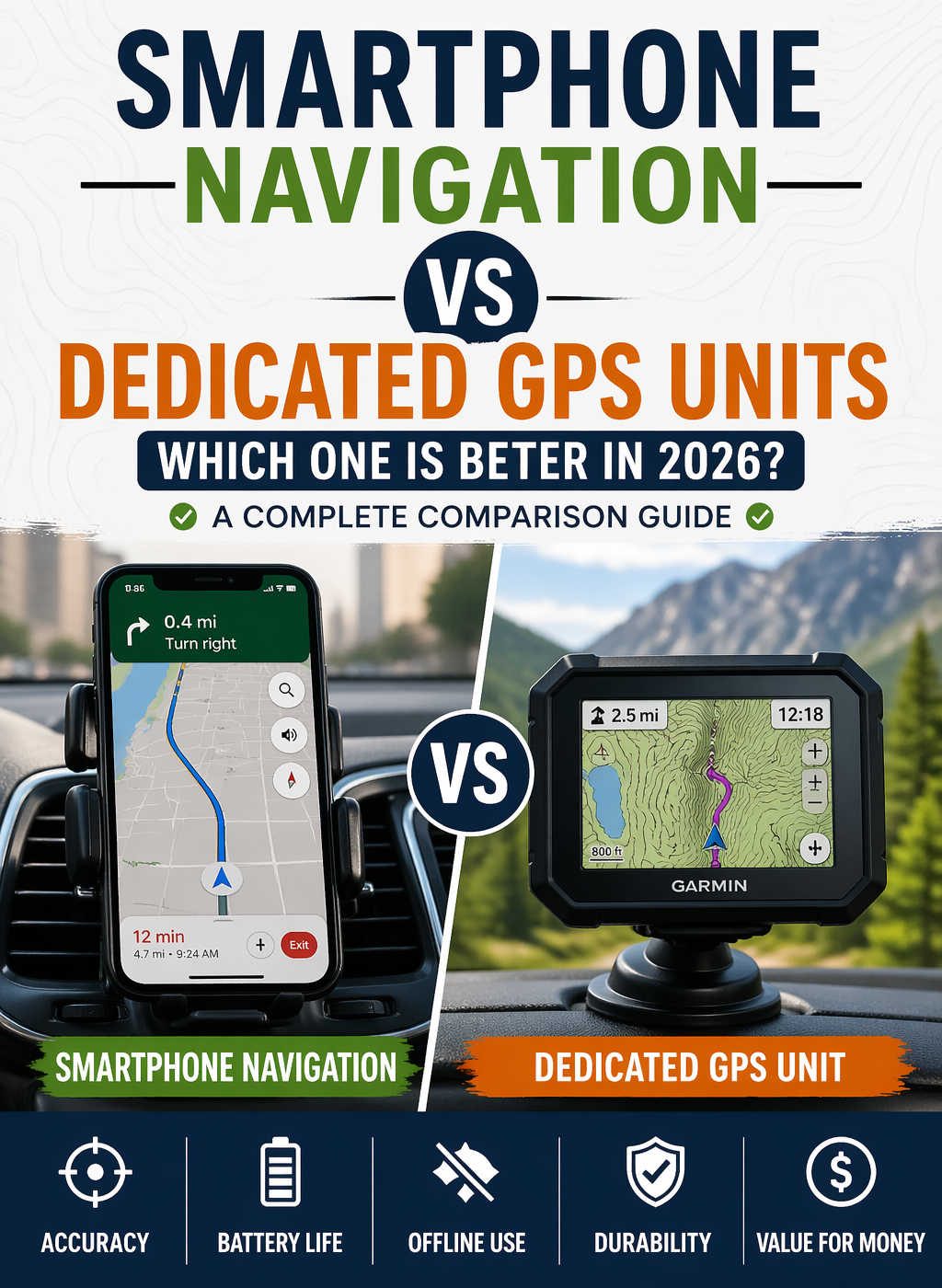
Navigation has come a long way from folded paper maps and guesswork. Today, most people rely on either their smartphone or a dedicated GPS device to get from point A to point B. But despite smartphones becoming incredibly powerful, dedicated GPS units haven’t disappeared—in fact, they still serve a critical role in certain scenarios.
If you’re trying to decide which option is better for your needs, this guide breaks everything down in practical, real-world terms. We’ll compare accuracy, battery life, usability, costs, and more—plus give you actionable recommendations so you can make a confident decision.
Understanding the Core Difference
At a glance, both smartphones and GPS devices seem to do the same thing: show your location and guide you to your destination. But under the hood, they work quite differently.
Smartphones use Assisted GPS (A-GPS). This means they combine satellite signals with data from cellular networks, Wi-Fi, and even nearby Bluetooth devices. This hybrid approach allows for faster location detection, especially in cities.
Dedicated GPS units, on the other hand, rely almost entirely on direct satellite communication. They are purpose-built devices with hardware optimized specifically for navigation.
This difference is what drives most of the pros and cons discussed below.
Accuracy: Which One Gets You There More Precisely?
Accuracy matters—especially when you’re navigating unfamiliar roads or remote trails.
Smartphones
Modern smartphones are surprisingly accurate. In most urban and suburban environments, they can pinpoint your location within 3–5 meters. They perform especially well in cities because they use additional signals (like Wi-Fi positioning) to refine accuracy.
However, performance can drop in:
- Dense forests
- Mountainous terrain
- Remote rural areas
- Underground or tunnel environments
Dedicated GPS Units
Dedicated GPS devices shine in challenging environments. They typically include:
- Stronger antennas
- Multi-band GNSS support
- Better signal retention
This means they maintain accuracy even when satellite visibility is limited.
Bottom Line
- City driving: Smartphone is more than enough
- Off-grid navigation: Dedicated GPS is more reliable
Battery Life: A Critical Factor Most People Overlook
Battery life is often the deciding factor—especially for long trips.
Smartphones
Navigation drains battery quickly because multiple systems are running at once:
- GPS chip
- Bright display
- Mobile data
- Background apps
Most smartphones last 6–10 hours with continuous navigation. Add heat, poor signal, or high brightness, and that number drops even further.
Dedicated GPS Units
These devices are designed for endurance. Many models offer:
- 20–40+ hours of battery life
- Replaceable batteries (AA or rechargeable packs)
- Energy-efficient displays
They’re also less affected by cold weather, which can significantly impact smartphone batteries.
Bottom Line
If you’re going on long drives, hikes, or multi-day trips without reliable charging, a dedicated GPS unit is far more dependable.
Offline Navigation and Connectivity
One of the biggest myths is that smartphones always need the internet for navigation.
Smartphones
Most modern apps allow you to download maps for offline use. However:
- You won’t get real-time traffic updates
- Some features may be limited
- You need to plan ahead and download maps
Dedicated GPS Units
These devices are built for offline use:
- Maps are stored locally
- No internet required
- Fully functional in remote areas
Bottom Line
- Connected environments: Smartphone wins
- No-signal zones: GPS device wins
Ease of Use and Interface
User experience matters more than most people think.
Smartphones
Smartphones offer:
- Intuitive touch interfaces
- Voice search and commands
- Seamless app integration
- Frequent updates
However, they can also be distracting:
- Notifications
- Calls
- App switching
Dedicated GPS Units
GPS devices focus on one thing: navigation. This results in:
- Simple, distraction-free interfaces
- Physical buttons (useful with gloves or in rain)
- Stable performance without interruptions
Bottom Line
If you value simplicity and focus, GPS units are better. If you prefer flexibility and features, smartphones are superior.
Display Visibility in Real Conditions
This is where many users get frustrated with smartphones.
Smartphones
- Bright screens, but reflective
- Difficult to see in direct sunlight
- High brightness drains battery quickly
Dedicated GPS Units
- Designed for outdoor visibility
- Transflective displays improve clarity in sunlight
- Readable in extreme conditions
Bottom Line
For outdoor use—especially hiking, biking, or boating—GPS units are significantly easier to read.
Durability and Build Quality
Let’s be realistic: navigation often happens in less-than-perfect conditions.
Smartphones
- Fragile glass screens
- Vulnerable to water and dust (unless ruggedized)
- Require protective cases
Dedicated GPS Units
- Built to withstand harsh environments
- Water-resistant or waterproof
- Shockproof designs
- Operate in extreme temperatures
Bottom Line
If your environment is rough, a dedicated GPS unit is the safer investment.
Features: Versatility vs Specialization
Smartphone Features
Smartphones offer a wide range of capabilities:
- Real-time traffic updates
- Voice navigation
- Points of interest (restaurants, gas stations, etc.)
- Integration with ride-sharing and delivery apps
- Frequent software updates
They are essentially all-in-one devices.
Dedicated GPS Features
GPS units focus on specialized navigation:
- Topographic maps
- Trail tracking
- Elevation data
- Route planning for outdoor activities
- Vehicle-specific routing (for trucks, RVs)
Bottom Line
- Everyday use: Smartphone
- Specialized navigation: GPS device
Cost Analysis: Short-Term vs Long-Term Value
Smartphones
- No extra hardware cost (if you already own one)
- Free or low-cost apps
- Possible data charges
- Faster wear and tear with heavy use
Dedicated GPS Units
- Upfront cost: typically $100–$500
- Minimal ongoing expenses
- Longer lifespan
Bottom Line
Smartphones are cheaper upfront, but GPS units can be a better long-term investment for heavy users.
Safety Considerations
Navigation should make driving safer—not more dangerous.
Smartphone Risks
- Notifications and distractions
- Temptation to multitask
- Screen interaction while driving
GPS Device Advantages
- No distractions
- Dedicated navigation interface
- Safer for focused driving
Bottom Line
For safety-critical situations, dedicated GPS units have a clear advantage.
Best Use Cases: When to Choose Each Option
Choose a Smartphone If You:
- Drive mainly in cities
- Need real-time traffic updates
- Want convenience and versatility
- Prefer not to buy extra hardware
Choose a Dedicated GPS If You:
- Travel in remote areas
- Go hiking, camping, or off-roading
- Need long battery life
- Require durability and reliability
Product Recommendations (2026)
If you’re considering a dedicated GPS unit, here are some strong options based on different needs.
For Driving
- Garmin DriveSmart Series
Great for everyday navigation with clear displays and smart features. - TomTom GO Discover
Known for accurate routing and reliable performance.
For Outdoor Adventures
- Garmin GPSMAP 67i
Excellent for hiking, trekking, and remote navigation. - Garmin eTrex Solar
Lightweight, efficient, and ideal for long outdoor trips.
For Budget Buyers
- Garmin eTrex 32x
Affordable and reliable for basic navigation needs.
Can You Use Both Together?
Yes—and this is often the smartest approach.
Many experienced travelers use:
- A smartphone for planning and live updates
- A GPS device as a backup and primary tracker in remote areas
This combination gives you flexibility and redundancy, which is especially valuable during long journeys.
The Future of Navigation Technology
The gap between smartphones and GPS units is shrinking.
Smartphones Are Improving With:
- Better GNSS support
- AI-powered navigation
- Improved battery efficiency
GPS Devices Are Evolving With:
- Smartphone integration
- Cloud connectivity
- Enhanced mapping systems
In the future, the distinction may blur even further, but for now, both still have clear advantages.
Frequently Asked Questions (FAQs)
Is a dedicated GPS better than a smartphone?
It depends on your use case. For city driving, smartphones are usually sufficient. For remote travel or outdoor activities, dedicated GPS units are more reliable.
Do smartphones work without internet for navigation?
Yes, if you download maps in advance. However, you’ll lose features like real-time traffic updates.
Why do hikers prefer GPS devices?
Because they offer better battery life, durability, and reliability in areas without network coverage.
Can a GPS device replace a smartphone?
Not entirely. GPS units are specialized tools and lack the versatility of smartphones.
Are GPS devices worth buying in 2026?
Yes, especially if you frequently travel off-grid or need a reliable backup navigation system.
Final Thoughts
Choosing between a smartphone and a dedicated GPS unit isn’t about which one is “better”—it’s about which one is better for you.
Smartphones dominate in convenience, features, and everyday usability. They’re perfect for commuting, urban driving, and quick navigation tasks.
Dedicated GPS units, however, still hold a strong position where reliability matters most. They excel in remote areas, harsh environments, and long-duration use.
If your navigation needs are simple, your smartphone is likely all you need. But if you venture beyond city limits or depend heavily on navigation, investing in a dedicated GPS unit—or using both—can make a significant difference.
In the end, the smartest choice is the one that keeps you on track, stress-free, and prepared for whatever journey lies ahead.
Discover more from Auto Volt Tech
Subscribe to get the latest posts sent to your email.
 Auto Volt Tech