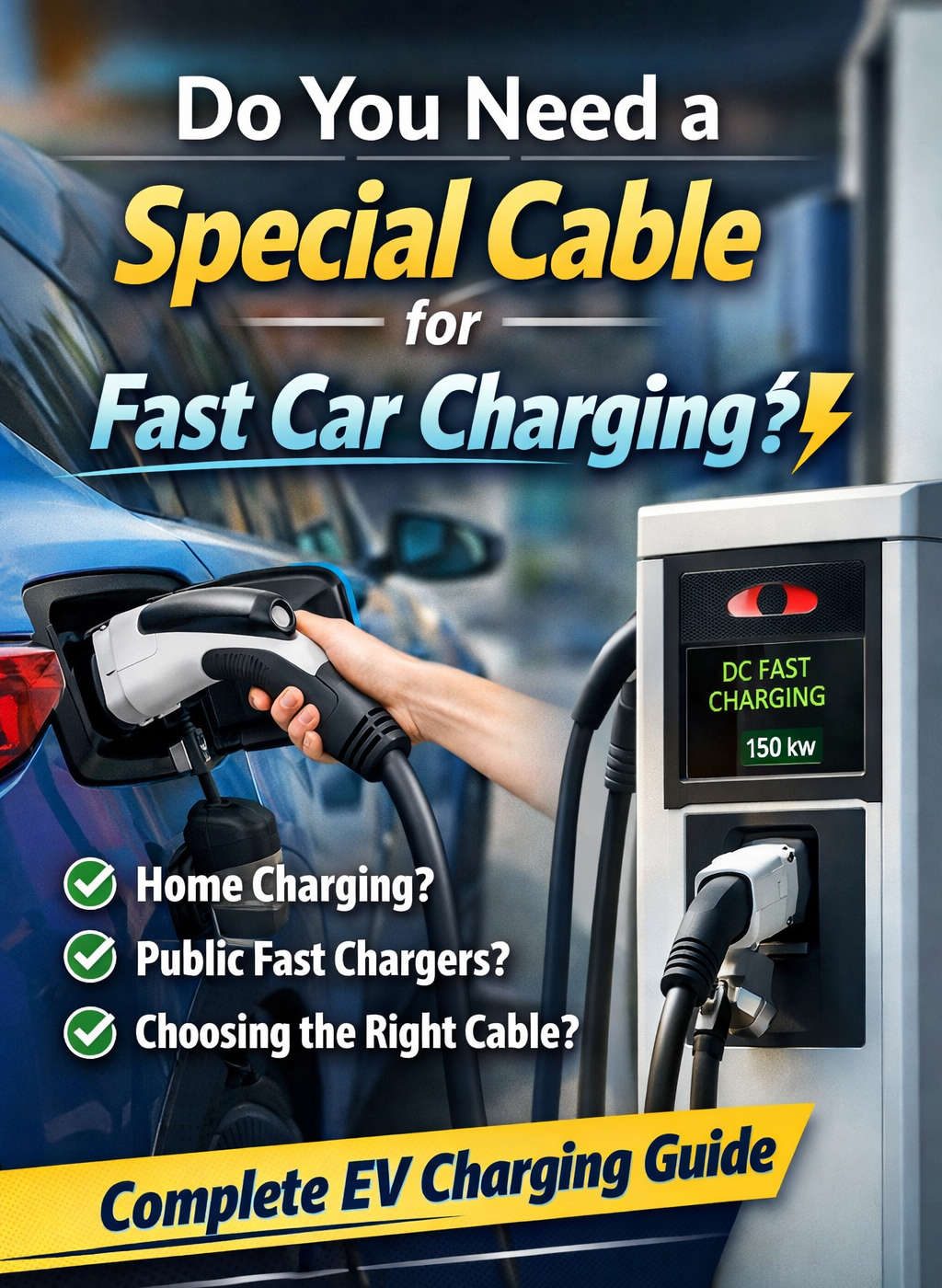
Electric vehicles are no longer a future concept—they are now a daily reality for millions of drivers around the world. As EV adoption grows, so does curiosity and confusion around charging. One of the most common and important questions new EV owners ask is: do I need a special cable for fast car charging?
The answer isn’t a simple yes or no. It depends on how you charge, where you charge, what kind of electric vehicle you own, and what you mean by “fast charging.” This guide breaks everything down in plain language, without technical jargon, so you can confidently choose the right charging setup for your needs.
Whether you’re charging at home, using public chargers, or planning long road trips, this article will help you understand how charging cables work, when you need a special one, and when you don’t.
Understanding What “Fast Charging” Really Means
Before talking about cables, it’s important to understand what fast charging actually is. Many EV owners assume that fast charging simply means plugging in with a better cable. In reality, charging speed depends on several factors working together.
Fast charging generally refers to charging methods that deliver higher power to your vehicle’s battery, allowing it to charge more quickly than a standard household outlet. However, not all fast charging is the same.
There are three main charging levels used by electric vehicles:
Slow charging (basic home charging)
This usually involves plugging your car into a regular wall outlet. It is the slowest method and can take many hours or even days to fully charge an EV.
Medium-speed charging (dedicated home or public chargers)
This is the most common everyday charging method for EV owners. It charges significantly faster than a regular outlet and is often used overnight at home or during the day at workplaces.
High-speed charging (fast or rapid charging)
This is what most people mean when they talk about “fast charging.” These chargers are typically found at public charging stations and can add significant driving range in a short amount of time.
Each of these charging levels uses cables differently, which is why the question of needing a special cable depends on which type of charging you’re using.
How Charging Speed Is Determined (It’s Not Just the Cable)
Many drivers assume that buying a thicker or more expensive cable will automatically make their car charge faster. In reality, the cable is only one part of a much larger system.
Charging speed is determined by four key elements:
The vehicle’s onboard charging capability
Every electric car has a built-in charging system that controls how much power it can accept. No matter how powerful the charger or cable is, the car will only take what it is designed to handle.
The charging station’s power output
A charging station can only deliver a certain amount of power. If the charger itself is slow, even the best cable won’t increase charging speed.
The battery’s condition and temperature
Cold or extremely hot batteries charge more slowly. The charging speed may also slow down as the battery fills up to protect battery health.
The charging cable’s power rating
The cable must be capable of safely carrying the amount of electricity being delivered. If it isn’t, charging speed will be limited or charging may not work at all.
In short, a cable does not create fast charging—it only allows fast charging to happen when everything else supports it.
Types of EV Charging Cables Explained Simply
Charging cables are not one-size-fits-all. Different charging methods and regions use different types of cables and connectors. Understanding the basic types helps you know when you need a special cable and when you don’t.
AC Charging Cables (Home and Most Public Chargers)
AC charging cables are used for everyday charging at home or at public charging stations that are not classified as fast chargers. These cables allow alternating current to flow into the car, where the vehicle converts it into battery power.
These cables are often portable and may come with your vehicle or be purchased separately.
They vary mainly by:
- Connector type
- Maximum current rating
- Cable thickness and length
AC charging cables are where most drivers need to make a decision about whether a “special” cable is required.
DC Fast Charging Cables (Rapid Chargers)
DC fast charging cables are completely different. These cables deliver direct current straight to the battery and are designed for very high power levels.
Important to know:
You do not bring these cables with you.
DC fast charging cables are permanently attached to the charging station. They are thick, heavy, and actively cooled in some cases. Because of their complexity and safety requirements, they are not sold as personal accessories.
If you use public fast chargers, you will never need to buy or carry a DC fast charging cable.
Do You Need a Special Cable for Home Charging?
Home charging is where most EV owners spend their time charging, so this is where the cable choice matters most.
Using a Standard Wall Outlet
Most electric vehicles come with a basic charging cable designed to plug into a standard household outlet. This cable is not special, but it is specifically designed for safe EV charging.
This type of charging is slow but reliable. It is best suited for:
- Short daily commutes
- Plug-in hybrid vehicles
- Emergency backup charging
If this charging method meets your needs, you do not need a special cable.
Installing a Home Charging Station
Many EV owners eventually upgrade to a dedicated home charging station for faster and more convenient charging.
Here’s where the cable question becomes important.
Some home chargers:
- Have a cable permanently attached
- Require you to use your own charging cable
If your charger has a built-in cable, you don’t need to buy anything extra.
If your charger requires a separate cable, you’ll need one that:
- Matches your vehicle’s connector type
- Is rated for the charger’s maximum power output
In this case, a higher-rated cable can be considered “special,” but it’s really just properly matched to your system.
Can a Better Cable Make Your EV Charge Faster at Home?
This is one of the most misunderstood aspects of EV charging.
A better cable cannot make your car charge faster than:
- What your vehicle’s onboard charger allows
- What your home charging station delivers
However, a cable can limit charging speed if it is not rated for enough power.
For example:
- A low-rated cable may only allow slower charging
- A properly rated cable allows your vehicle to charge at its maximum supported speed
So while a special cable won’t create faster charging, using the wrong cable can slow things down or cause safety issues.
Public Charging and Whether You Need to Bring a Cable
The public charging stations vary widely depending on location and operator.
Public Medium-Speed Chargers
Some public chargers require drivers to bring their own cable, while others have cables already attached.
If you frequently use public chargers that don’t provide cables, carrying a compatible cable in your trunk is very helpful.
In these cases:
- A standard, properly rated cable is sufficient
- No special fast-charging cable is required
Public Fast Chargers
Public fast chargers always include their own cables. These cables are specifically designed for high power and are managed by the charging station itself.
When using fast chargers:
- You do not bring your own cable
- You simply plug in the station’s cable and charge
This is one of the biggest reasons many EV owners never need a special cable at all.
Connector Types and Why They Matter
Charging cables must physically fit your vehicle’s charging port. This is where connector types come into play.
Different regions and manufacturers use different connectors, but the key point is simple:
Your cable must match your vehicle and the charger.
Using the wrong connector type means charging won’t work, regardless of cable quality or power rating.
Some vehicles also support adapters, but adapters should only be used when officially supported and properly rated.
Cable Quality, Safety, and Why Cheap Isn’t Always Better
Charging cables handle high electrical currents for long periods of time. Poor-quality cables can overheat, degrade quickly, or become safety hazards.
When choosing a charging cable, look for:
- Strong insulation
- Secure connectors
- Thick internal wiring
- Proper safety certification for your region
A high-quality cable lasts longer, performs better, and protects both your vehicle and your home’s electrical system.
Saving money on a low-quality cable can cost more in the long run through replacements, repairs, or potential damage.
Cable Length and Daily Convenience
Cable length doesn’t affect charging speed, but it does affect usability.
A cable that’s too short:
- Limits where you can park
- Makes charging frustrating
A cable that’s too long:
- Can be heavy and bulky
- Requires proper storage
Choose a length that comfortably reaches your charging port without being excessive. For most home users, a medium-length cable offers the best balance.
Are Adapters a Good Alternative to Special Cables?
Adapters can be useful in specific situations, especially for vehicles that support multiple charging standards.
However, adapters:
- Must be properly rated
- Should be manufacturer-approved when possible
- Should never exceed the power limits of the cable or charger
Adapters do not turn slow charging into fast charging. They only allow physical compatibility between different connectors.
Wireless Charging and the Future of EV Charging
Wireless charging technology is slowly entering the EV market. Instead of plugging in, the vehicle charges by parking over a charging pad.
While convenient, wireless charging:
- Is generally slower than wired charging
- Is less efficient
- Is not yet widely available
For now, cables remain the fastest and most practical charging solution.
Common Mistakes EV Owners Make with Charging Cables
Many EV owners make simple mistakes that affect charging performance or safety.
Some of the most common include:
- Assuming all cables support fast charging
- Using damaged or worn cables
- Leaving cables exposed to harsh weather
- Buying cables without checking power ratings
- Believing thicker cables automatically charge faster
Avoiding these mistakes helps ensure safe and efficient charging every day.
Practical Advice for Choosing the Right Charging Cable
If you want a simple way to decide whether you need a special cable, ask yourself these questions:
- Am I charging mostly at home or in public?
- Does my charger include a built-in cable?
- What is the maximum charging power my car supports?
- Does my cable match my charger and vehicle?
- Is my cable rated for the power I’m using?
If everything matches correctly, you already have what you need.
So, Do You Really Need a Special Cable for Fast Car Charging?
Let’s bring it all together.
You do not need a special cable if:
- You use public fast chargers
- Your home charger includes a cable
- Your current cable is properly rated
You may need a higher-rated or compatible cable if:
- Your home charger requires a separate cable
- Your existing cable limits charging speed
- You frequently use public chargers without attached cables
Fast charging is not about buying the most expensive cable—it’s about using the right cable for the right setup.
Final Thoughts
Electric vehicle charging can feel confusing at first, but once you understand how cables fit into the bigger picture, the decisions become much easier.
A charging cable is not a speed booster. It is a safety component and a compatibility tool. As long as it is rated correctly and matches your vehicle and charger, it will support the fastest charging your system allows.
Instead of chasing “special” cables, focus on:
- Understanding your vehicle’s charging limits
- Choosing quality equipment
- Charging in ways that fit your daily routine
With the right setup, charging your EV becomes simple, safe, and stress-free.
Discover more from Auto Volt Tech
Subscribe to get the latest posts sent to your email.
 Auto Volt Tech