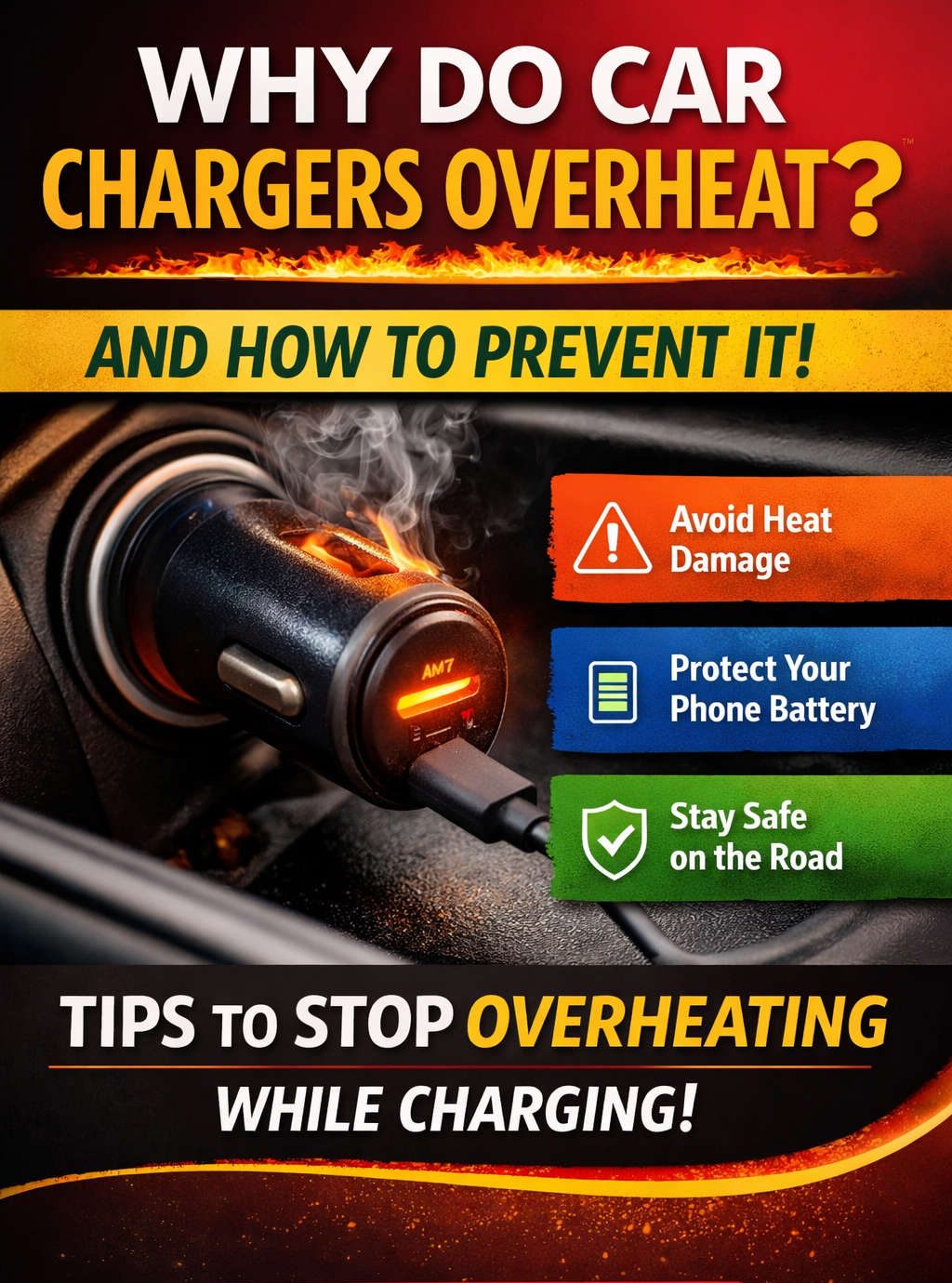
Car chargers have quietly become one of the most essential accessories in modern vehicles. Whether you rely on your phone for navigation, music streaming, ride-hailing, or work-related communication, keeping your device charged while driving is no longer optional—it is a daily necessity. Yet many drivers notice a recurring issue: their car charger becomes unusually hot during use.
A warm charger is often dismissed as normal, but excessive heat is a warning sign that should not be ignored. Overheating can shorten the life of your charger, degrade your phone’s battery, cause charging interruptions, and in rare cases create safety hazards. Understanding why this happens and how to prevent it can save you money, protect your devices, and improve overall charging efficiency.
This article takes a deep, practical look at why car chargers overheat, what factors contribute to the problem, how to recognize dangerous heat levels, and what you can do to prevent overheating altogether.
Understanding How Car Chargers Actually Work
To understand overheating, it helps to know what happens inside a car charger.
Most vehicles provide power through a 12-volt outlet, commonly referred to as the cigarette lighter socket. Your phone, however, cannot accept that voltage directly. Car chargers contain internal circuitry that converts the vehicle’s higher voltage into a lower, stable output—usually 5 volts for standard USB charging or variable voltages for fast-charging standards.
This voltage conversion process requires electronic components such as voltage regulators, transformers, capacitors, and control chips. During conversion, not all electrical energy is transferred efficiently. Some of it is lost in the form of heat.
The harder the charger works—whether due to high power demand, poor efficiency, or environmental conditions—the more heat it generates.
Why Car Chargers Overheat: The Real Reasons
Power Conversion Inefficiency
No electronic charger is 100 percent efficient. When converting power from your car’s electrical system to your phone’s battery, energy losses are inevitable. These losses turn into heat.
Higher power output means more current flowing through internal components. If the charger is poorly designed or not built for sustained high output, it will heat up quickly.
Fast chargers, which deliver significantly more power than older models, are especially susceptible if they lack proper thermal management.
Cheap Internal Components
One of the most common causes of overheating is low-quality internal components.
Inexpensive chargers often use:
- Lower-grade capacitors
- Thin internal wiring
- Inferior voltage regulators
- Minimal insulation
These components have higher electrical resistance, which directly translates into more heat during operation. Over time, heat further degrades these components, making overheating progressively worse.
This is why extremely cheap chargers tend to fail sooner and run hotter than reputable alternatives.
Poor Heat Dissipation Design
Heat must go somewhere. Well-designed chargers include internal heat sinks, proper spacing between components, and materials that allow heat to dissipate outward safely.
Poorly designed chargers trap heat inside a small plastic shell. Without airflow or thermal pathways, temperature rises rapidly and remains high for extended periods.
Chargers with completely sealed designs and no ventilation are especially prone to overheating during long drives.
High Ambient Temperature Inside the Car
Cars can become extremely hot, especially when parked in direct sunlight. Interior temperatures can easily exceed safe operating limits for electronic accessories.
When a charger starts off in a hot environment, it has less capacity to dissipate heat generated during charging. Even a high-quality charger can overheat faster when the surrounding air is already hot.
This is why chargers often feel significantly hotter during summer months compared to winter.
Charging While Using Power-Intensive Apps
Using your phone while charging places additional stress on both the phone and the charger.
Activities such as:
- GPS navigation
- Video streaming
- Video calls
- Gaming
- Running multiple background apps
increase power demand. The charger must supply energy not only to charge the battery but also to power active processes. This higher load results in increased current flow and additional heat generation.
Multiple Devices Connected at Once
Charging multiple devices from a single car charger increases overall power demand. If the charger is not designed to handle simultaneous high output across multiple ports, overheating becomes likely.
Many multi-port chargers advertise high combined wattage but struggle to sustain it safely for long periods.
Loose or Poor Electrical Connections
A loose fit in the car’s power socket can create intermittent electrical contact. This leads to micro-arcing and increased resistance, both of which generate heat.
Similarly, damaged USB cables or worn charging ports can contribute to overheating by forcing the charger to work harder to maintain stable output.
The Science Behind Heat Build-Up in Chargers
Heat generation in chargers follows basic electrical principles.
When electrical current flows through resistance, heat is produced. The higher the current and the greater the resistance, the more heat is generated. This relationship explains why fast charging, poor materials, and thin wiring all contribute to overheating.
Efficient chargers minimize resistance and regulate current intelligently. Inefficient chargers allow heat to accumulate faster than it can be dissipated.
Signs Your Car Charger Is Overheating
Knowing the warning signs can help you act before damage occurs.
Common indicators include:
- Charger becomes uncomfortable or painful to touch
- Charging speed suddenly slows or stops
- Phone repeatedly disconnects and reconnects
- Plastic casing feels soft or deformed
- Burning or chemical smell
- Charger shuts off intermittently
If any of these occur, unplug the charger immediately and allow it to cool.
Why Overheating Should Never Be Ignored
Damage to Your Phone Battery
Excessive heat transfers from the charger to the phone, accelerating battery degradation. Lithium-ion batteries are especially sensitive to heat, and repeated exposure reduces capacity and lifespan.
Over time, this results in shorter battery life, unexpected shutdowns, and slower charging.
Permanent Charger Failure
Heat weakens solder joints, melts insulation, and degrades electronic components. Once internal damage occurs, the charger may continue to function temporarily but will fail unpredictably.
Sudden failure while driving can be inconvenient at best and dangerous at worst.
Safety Risks Inside the Vehicle
Although rare, severely overheated chargers can melt plastic, short-circuit, or spark. In confined vehicle interiors, this poses a fire risk, particularly if flammable materials are nearby.
Safety should always outweigh convenience when it comes to power accessories.
How to Prevent Car Charger Overheating Effectively
Invest in High-Quality Chargers
The single most effective prevention step is choosing a quality charger.
Look for chargers that:
- Are made by reputable manufacturers
- Have solid, well-fitted connectors
- Use sturdy materials
- Feel heavier due to better internal components
Quality chargers are designed to manage heat properly and maintain efficiency under load.
Match Charger Output to Your Device Needs
Using a charger with far more power than your device requires can lead to inefficiency, while underpowered chargers are forced to operate at maximum output continuously.
Choose a charger that aligns with your phone’s charging specifications. Smart chargers that adjust output dynamically are preferable.
Avoid Extreme Heat Conditions
Whenever possible:
- Park in shaded areas
- Use windshield sunshades
- Ventilate the car before charging
- Avoid leaving chargers plugged in when the car is parked in extreme heat
Lower ambient temperature significantly reduces overheating risk.
Improve Ventilation Around the Charger
Ensure the charger is not covered or pressed against insulating materials.
Avoid placing chargers under:
- Seat covers
- Clothing
- Dash mats
- Paper or bags
Allowing airflow helps dissipate heat naturally.
Reduce Phone Usage While Charging
If your phone feels hot while charging, reduce its workload.
Simple steps include:
- Lowering screen brightness
- Closing unnecessary apps
- Avoiding video streaming or gaming
- Using airplane mode when possible
Lower power demand equals less heat.
Use High-Quality Cables
Cables play a critical role in heat management. Thin or damaged cables increase resistance, forcing the charger to compensate.
Use short, well-insulated cables and replace any that show signs of wear.
Unplug When Not in Use
Leaving chargers plugged in continuously exposes them to heat cycles and electrical stress, even when no device is connected.
Unplugging when not in use extends charger lifespan and reduces unnecessary heat buildup.
Special Tips for Frequent Drivers and Professionals
If you spend hours on the road daily, consider upgrading your setup.
- Use chargers with built-in thermal protection
- Avoid charging multiple high-power devices simultaneously
- Consider vehicle-installed USB ports designed for sustained use
- Monitor charger temperature during long trips
Professional drivers benefit the most from proactive charger management.
Common Misconceptions About Charger Heat
Many people believe that heat is always normal. In reality, mild warmth is acceptable, but excessive heat is not.
Another common myth is that all fast chargers overheat. In truth, well-designed fast chargers are often more efficient and run cooler than cheap slow chargers.
Understanding the difference prevents unnecessary risk.
When You Should Replace Your Car Charger
Replace your charger immediately if:
- It frequently overheats
- The casing is cracked or warped
- You notice burning smells
- Charging becomes inconsistent
- Your phone battery performance declines after charging
Chargers are inexpensive compared to the cost of replacing a damaged phone or repairing a vehicle interior.
Final Thoughts: Charging Safely and Efficiently on the Road
Car charger overheating is a common but preventable problem. It is caused by a combination of electrical inefficiency, poor design, environmental heat, and user behavior. While slight warmth is normal, excessive heat should always be taken seriously.
By choosing high-quality chargers, matching power output to your device, managing heat exposure, and adopting smarter charging habits, you can dramatically reduce the risk of overheating. These small adjustments not only protect your devices but also improve safety and extend the life of your charging equipment.
A reliable car charger should work quietly in the background—powering your journey without becoming a problem of its own.
Discover more from Auto Volt Tech
Subscribe to get the latest posts sent to your email.
 Auto Volt Tech